
Ensuring Full Standards Compliance in Test and Measurement Calibration
Morehouse’s test and measurement calibration-first philosophy ensures:
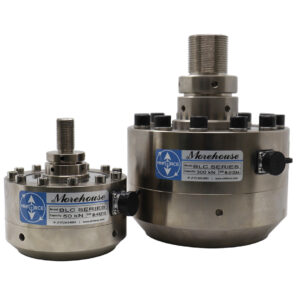
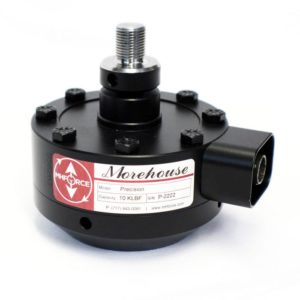
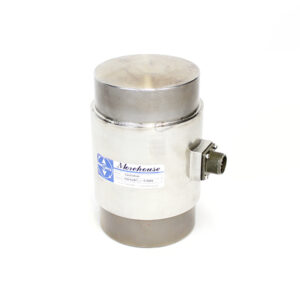
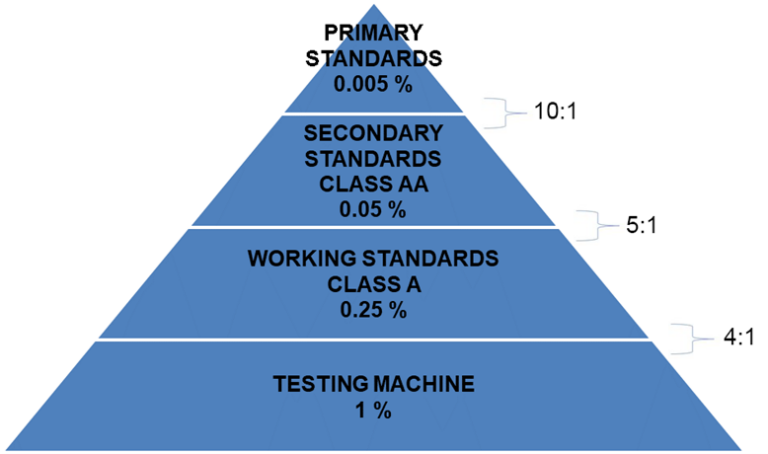
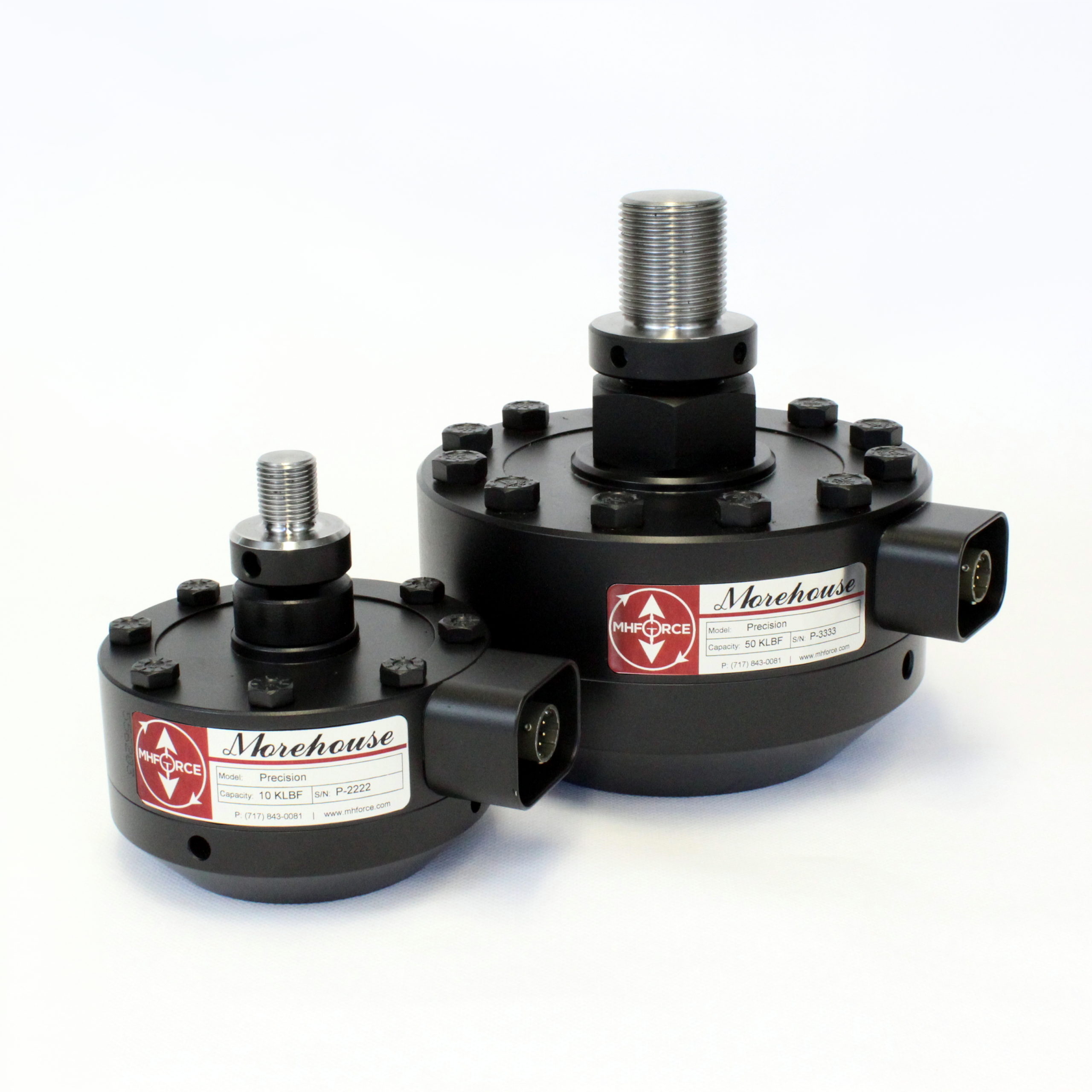
- Your load cells or transfer standards fully comply with ASTM E74 or ISO 376 requirements
- Your testing machines can be certified to ASTM E4 or ISO 7500 with minimal uncertainty
- All calibration data are traceable to SI via NIST, meeting accreditation and audit expectations
This provides measurement defensibility and eliminates risk during audits, proficiency testing, or inter-laboratory comparisons.
If you are working to ASTM E74, we have a load cell selection guide to simplify things.
Measurement Uncertainty Calculations Using ASTM E74 or ISO 376
Are you having trouble figuring out all of the requirements for calculating a CMC for force uncertainty or torque uncertainty? Morehouse has made an easier to use document in Excel to provide a template for calculating CMCs and explains everything required to pass an ISO/IEC 17025 audit. It took us hours to develop, and it is unlocked for anyone to have the tools needed to use this sheet or create their own.
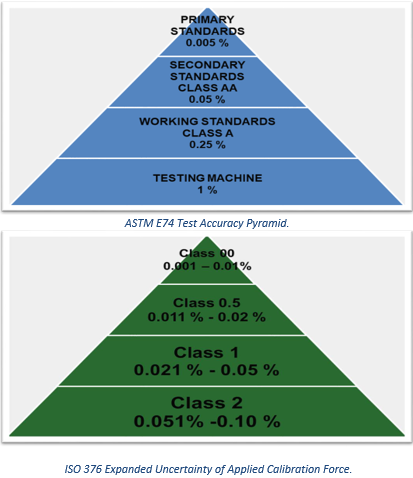
The sheet is designed to work well with ASTM E74 and ISO 376 calibration standards (often the hardest ones to figure out how to properly conduct a Measurement Uncertainty for force with).
For additional uncertainty guidance, please read our Calculating Force Uncertainty for a Morehouse Force Calibrating Machine here.
We also offer additional classes on MU, free weekly emails, and force calibration basics classes, so please contact us if you are interested, or check out our force training page offerings.
ASTM E74 Versus ISO 376
Morehouse has been performing ASTM E74 and ISO 376 calibrations for decades. We have followed the ASTM E74 standard since its likely introduction in 1947 and have performed ISO 376 calibrations since the early 2000s. Before the early 2000s, ISO 376 was a DIN standard that later became EN-10002-3 and then ISO 376 in the 1990s. Because of this long history, we had always assumed that the world's force measurement community was aware that the standards were completely different and could not be interchanged in any test and measurement calibration process.
However, we have learned that some laboratories provide field calibrations by intermixing and using an ASTM E74 calibration to certify a tensile machine to ISO 7500. Several organizations worldwide are unaware that the standards have vastly different criteria requirements, creating significant risks in force measurement and test and measurement calibration compliance.
If ISO 7500 is the requirement, then calibration must be performed in accordance with ISO 376 on the force-proving instruments used to certify the tensile machine. If ASTM E74 is the requirement, then the elastic force-measuring instrument must be calibrated following the ASTM E74 standard—ensuring proper alignment with accepted test and measurement calibration practices.
Test andMeasurement Calibration Summary
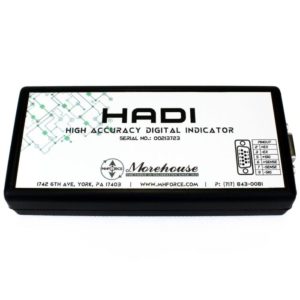
Morehouse delivers calibration-first accuracy for the test and measurement calibration industry, ensuring that every force measurement—whether produced by a load cell, indicator, transfer standard, or complete test system—is traceable, repeatable, and defensible. With system-level calibration, deadweight primary standards, custom-engineered sensors, and compliance with ASTM E4, ISO 7500, ASTM E74, and ISO 376, Morehouse helps labs and manufacturers achieve true measurement confidence.
By replicating real-use conditions, applying meaningful measurement uncertainty models, and offering custom solutions for complex setups, Morehouse ensures that correlation issues are reduced, audit performance is improved, and force data can be trusted across all applications.
If you want to know more about how Morehouse can help you make better test and measurement calibration, Contact Sales
For more information or webinars on measurement risk, test and measurement calibration, please visit our YouTube channel: https://www.youtube.com/@mhforcecalibration