
Why Civil Engineering Teams Choose Morehouse for Construction Load Testing Equipment Calibration
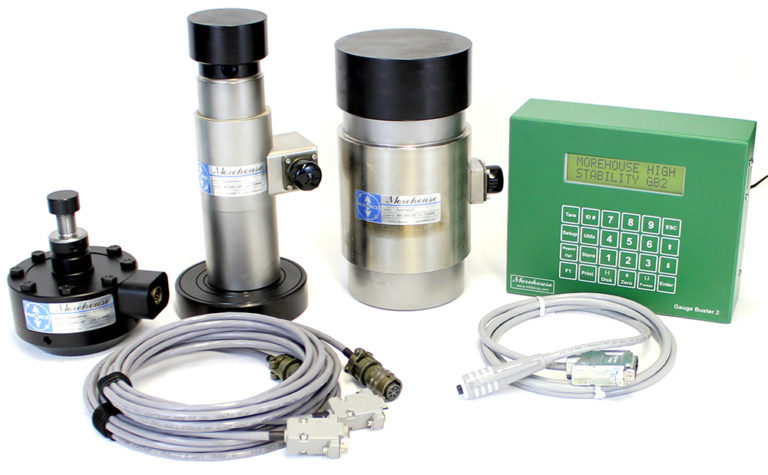
- Prestressed Concrete Testing: Specialized through-hole load cells and kits provide stable, accurate correlation for cable or rebar tensioning—essential components of construction load testing equipment—verified across the entire sensor-indicator-fixture chain.
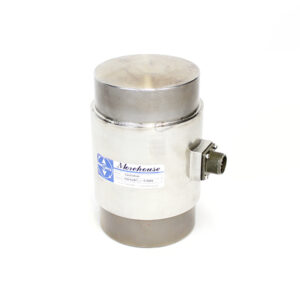
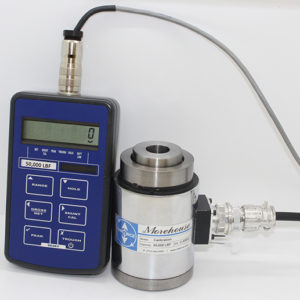
- Material Testing Labs: Calibration kits designed for high accuracy and portability (with a 600,000 lbf load cell weighing less than 30 lkb) simplify the verification of Concrete Compression Machines (See: Concrete Compression Machine Calibration Kit).
- Structural & Load Monitoring: Custom load cells and load pins designed for challenging geotechnical and structural applications, eliminating setup-induced errors before testing begins (See: Custom Load Cells Designed For Your Application).
- Quality & Compliance: ISO/IEC 17025-accredited and traceable to SI through NIST, ensuring all data meets demanding civil engineering and safety standards.
- Lowest Uncertainty: We utilize deadweight primary standards for calibrations up to 120,000 lbf, delivering measurement uncertainties 10-50 times lower than competitors, increasing confidence in critical high-force measurements (See: Load Cells).
- Prestressed Concrete Testing: Specialized through hole load cells and kits provide stable, accurate correlation for cable or rebar tensioning, verified across the entire sensor-indicator-fixture chain.
- Material Testing Labs: Calibration kits designed for high accuracy and portability (with a 600,000 lbf load cell weighing less than 30 lkb) simplify the verification of Concrete Compression Machines (See: Concrete Compression Machine Calibration Kit).
- Structural & Load Monitoring: Custom load cells and load pins designed for challenging geotechnical and structural applications, eliminating setup-induced errors before testing begins (See: Custom Load Cells Designed For Your Application).
- Quality & Compliance: ISO/IEC 17025-accredited and traceable to SI through NIST, ensuring all data meets demanding civil engineering and safety standards.
- Lowest Uncertainty: We utilize deadweight primary standards for calibrations up to 120,000 lbf, delivering measurement uncertainties 10-50 times lower than competitors, increasing confidence in critical high-force measurements (See: Load Cells).
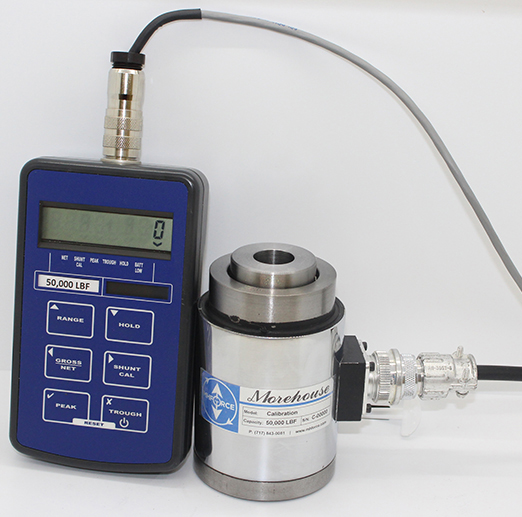
Construction Load Testing Equipment Featured Product Solutions
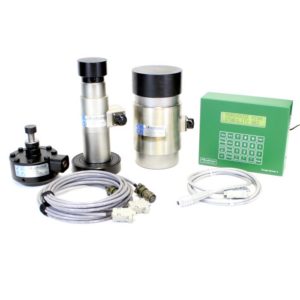
- Prestressed Concrete Calibration Kit
This system is designed specifically for testing cables or rebar, offering increased accuracy and portability.
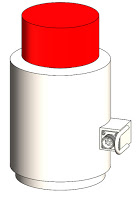
- Through Hole Design: The hollow compression canister load cell features a 0.75-inch through hole, allowing for standard 0.5-inch or 0.6-inch cables/rebar to pass directly through for precise tension monitoring (See: Prestressed Concrete Calibration Kit).
- Precision and Capacity: Available in 50k or 75k capacities, the load cell is calibrated with deadweight primary standards to an accuracy better than 0.002 % of applied force.
- Field Ready: Kits are provided with a swivel top assembly for uniform load distribution, alignment adapters to minimize concentrated forces, and a carrying case for safe transport and field use.
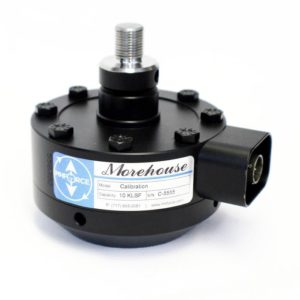
- Through Hole / Donut Load Cells
For applications requiring load verification on a shaft, bolt, or cable, our through hole load cells (also known as load washers or donut load cells) provide a compact, high-capacity solution for measuring bolt force measurements, clamping forces, and monitoring forces on wire ropes (See: Thru-Hole Load Cells).
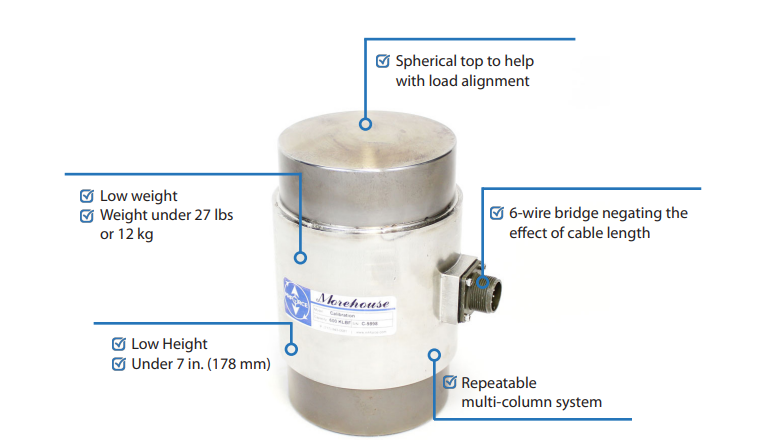
Construction & Civil Engineering Application Examples
High-Accuracy Construction Load Testing Equipment for Bridge, Foundation, and Geotechnical Verification.
- Prestressing Verification: Calibrating jacks and tensioning equipment used on concrete bridge and building elements.
- Pile Load Testing: High-capacity compression systems to verify foundation and pile strength.
- Rock and Soil Testing: Specialized load cells for geotechnical measurements and stress analysis.
- Crane & Hoist Certification: Load link calibration for overhead lifting equipment used on construction sites.
- Anchor Bolt Monitoring: Using through hole load cells to ensure critical fasteners are tightened to the correct force specification.
What You Get
System-Level Calibration for Construction Load Testing Equipment
Morehouse delivers system-level calibration that replicates actual end-use conditions across the entire sensor-indicator-fixture chain—ensuring your construction load testing equipment performs with reliable accuracy in the field, not just in the lab.
ASTM/ISO Compliance
All calibrations include certificates that meet ASTM E74 or ISO 376 requirements, supporting laboratory accreditation, regulatory audits, and quality programs essential for civil engineering and geotechnical testing.
Applied Measurement Uncertainty (MU)
We implement applied measurement uncertainty models and decision rules tailored for high-confidence structural testing, reducing measurement risk and improving traceability for critical load applications.
Fast Turnaround Time
Repeat calibrations of your construction load testing equipment are completed in 7–10 business days, minimizing downtime while ensuring ongoing accuracy and compliance.
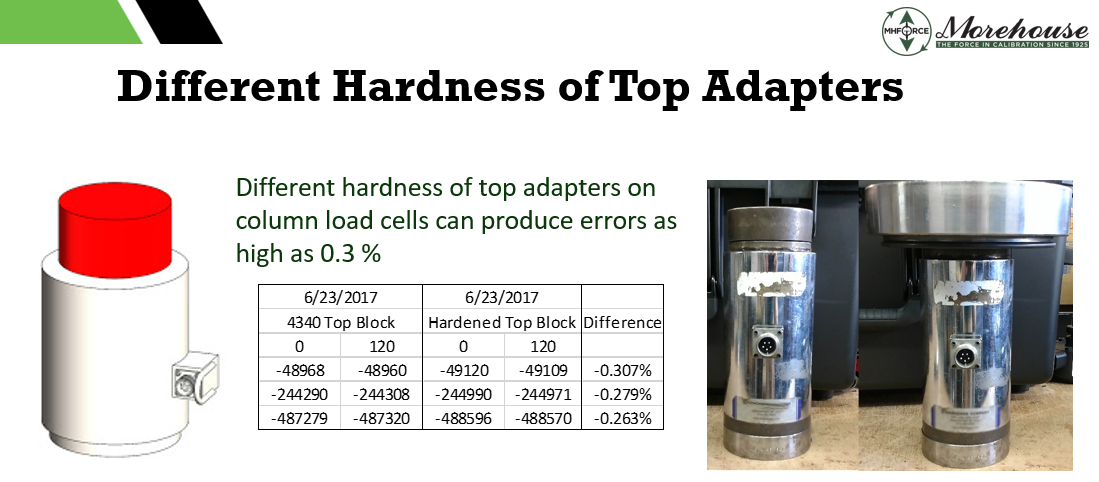
Common Measurement Errors With Construction Load Testing Equipment
Common Construction Load Testing Equipment Errors in high-capacity force measurement often originate not in the load cell itself, but in the interface between the cell and the structure being tested. Morehouse helps engineers identify and mitigate these common sources of error:
1. Adapter (Top Block) Hardness & Geometry
The load cell's performance is highly sensitive to the material it contacts.
-
The Error: Using a top adapter (e.g., a compression block or platen) that is significantly softer or harder than the load cell's own loading surface will introduce errors. A soft adapter can deform under load, causing uneven stress distribution and non-repeatability in the readings.
-
The Fix: Morehouse ensures all calibration and testing adapters are engineered with a certified hardness that is compatible with the load cell, guaranteeing the most uniform load application possible.
2. Alignment and Off-Axis Loading
High-capacity testing for piles, concrete machines, or prestressing jacks rarely achieves perfect axial alignment in the field.
-
The Error: If the load is applied at an angle or slightly off-center (an eccentric load), the force transducer must handle unwanted side-loads or moments. This dramatically increases the load cell's Measurement Uncertainty (MU), leading to incorrect acceptance decisions.
-
The Fix: Our Prestressed Concrete Calibration Kit and custom load cell systems are specifically designed to minimize these costly field-induced errors.
3. Hysteresis and Zero-Drift
These errors affect the reliability of the measurements over the course of a long test or project.
-
The Error: Hysteresis is the difference in output when reaching the same load point by increasing the load versus decreasing the load.
-
Zero-drift is a change in the zero reading when the load is removed. Both errors lead to non-repeatable results and can be magnified by temperature changes on a job site.
-
The Fix: Using a high-quality, calibrated load cell (like the models calibrated to better than 0.002 % of applied force) and allowing the equipment to thermally stabilize before testing reduces these inherent material errors.
4. Calibration Curve Misuse (ASTM E74 / ISO 376)
-
The Error: Many labs or field technicians use a calibration certificate to calculate force values only at the discrete points tested during calibration. Interpolating values between these points using a simple linear calculation (straight-line fit) introduces error because load cells are not perfectly linear.
-
The Fix: Morehouse certificates provide ASTM E74 or ISO 376 curve-fit coefficients, allowing engineers to calculate the true load at any intermediate point with maximum accuracy, ensuring compliance and confidence across the full measurement range.
Morehouse can help you make safer measurement with your construction load testing equipment.
If you want to know more about how Morehouse can help you make better measurements, Contact Sales.
For more information or webinars on measurement risk and load cells, please visit our YouTube channel: https://www.youtube.com/@mhforcecalibration