

Important Force Measurement Error - Thread Loading In Compression - Intro
It is important to remember that not all calibration laboratories provide the same type of calibration service. For load cells calibrated in compression, there may be a noticeable difference in output.
The output depends on the calibration fixtures used at the time of calibration, the alignment of the UUT (unit under test), the hardness of the top adapter, and other factors.
These are all potential topics for later blogs. In this blog, we discuss how loading through the bottom threads in compression may affect the output on certain types of load cells.
For some labs, it is standard practice to load flat against the base, while other labs load the cell through the threads.
It is important for you, the end user, to know whether your load cell was calibrated against a flat base or through the bottom threads; it could make a difference.
At Morehouse, our standard procedure is to load a cell flat against the base, as shown in Figure 1.
We are aware of other labs whose standard procedure is to load the cell through the bottom threads.
For shear web-type load cells, there is a difference, and we can put a number on the potential difference between these two calibration methods.
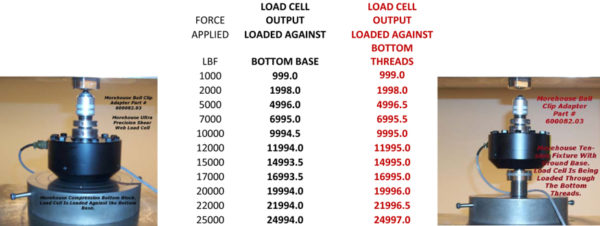
Figure 1. Shear web-type load cell loaded flat against the base in the Morehouse deadweight machine.
For this test, we took a standard shear web-type load cell and calibrated it using our deadweight force machine.
Our deadweight machine realizes the unit of force to 0.0016 % or better, as listed on our scope of accreditation.
The results in Figure 2 show a difference of about 0.012 % in output at full scale.
This 0.012 % difference is over seven times larger than the uncertainty of the deadweight standards used for the test.
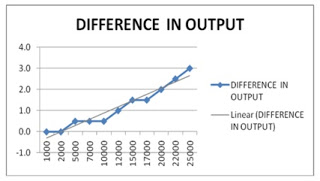
Figure 2. Difference in output at each calibration point between flat-base loading and thread loading in compression.
We took a standard shear web-style load cell and calibrated it using our deadweight force machine.
We believe we can realize the unit of force with this machine to about 0.0016 % or better (0.0016 % is what is found on our scope of accreditation).
The results listed above show a difference of about 0.012 % in output at full scale from loading flat against the base versus thread loading in compression.
This 0.012 % difference is about four times larger than the originally reported uncertainty.
Important Force Measurement Error - Thread Loading In Compression - Intro
If the compression calibration method is not listed on your certificate of calibration, I would suggest calling your calibration laboratory and asking how they calibrated your load cell in compression. We shot a video that shows a different test with similar results; the video can be found at http://www.mhforce.com/force.
If you enjoyed this article, check out our LinkedIn and YouTube channel for more helpful posts and videos.
# Thread Loading in Compression