

How to Choose Between a Proving Ring and a Load Cell for Force Calibration
If you have spent any time in a force calibration lab, you have probably faced this question at least once: Should I use a proving ring or a load cell as my reference standard? It is a topic that frequently comes up when we do force measurement training at NCSLI and MSC, and for good reason. Both instruments have legitimate roles in the calibration world, but they serve different needs, require different levels of operator discipline, and carry very different day-to-day workflows.
This guide walks you through the key considerations so you can make an informed decision for your specific application.
First, Understand What You Are Working With
The Proving Ring
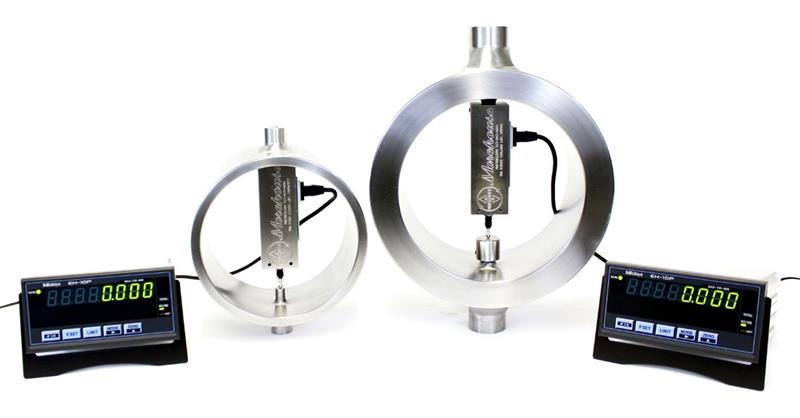
A proving ring is a precision elastic ring that deflects under load. That deflection, measured with a dial micrometer or a displacement sensor, is converted into a force value using the ring's calibration equation, which is typically a polynomial. The concept is elegantly simple and mechanically robust. In fact, Morehouse has proven rings still in service after more than 60 years.
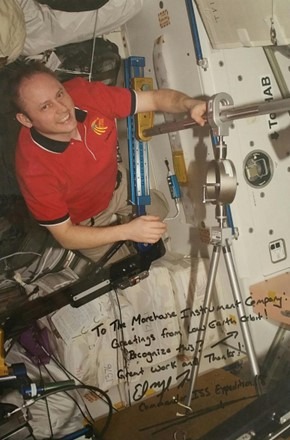
The digital version significantly reduces reading errors compared to the old dial-and-reed designs. If you are committed to proving rings, always choose digital over analog. That
is, unless you are using a Proving, like the application below, where digital is much more difficult.
The Load Cell
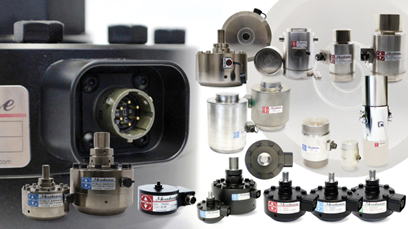
A load cell is a force transducer that converts mechanical force into an electrical signal using bonded strain gauges arranged in a Wheatstone bridge circuit. As force is applied, tiny elastic deformations change the bridge output, which a digital indicator converts into engineering units such as pounds-force or Newtons. Modern indicators can apply multi-point linearization or polynomial coefficients, so the display reads direct force without any manual computation on your part.
---
The Four Factors That Should Drive Your Decision
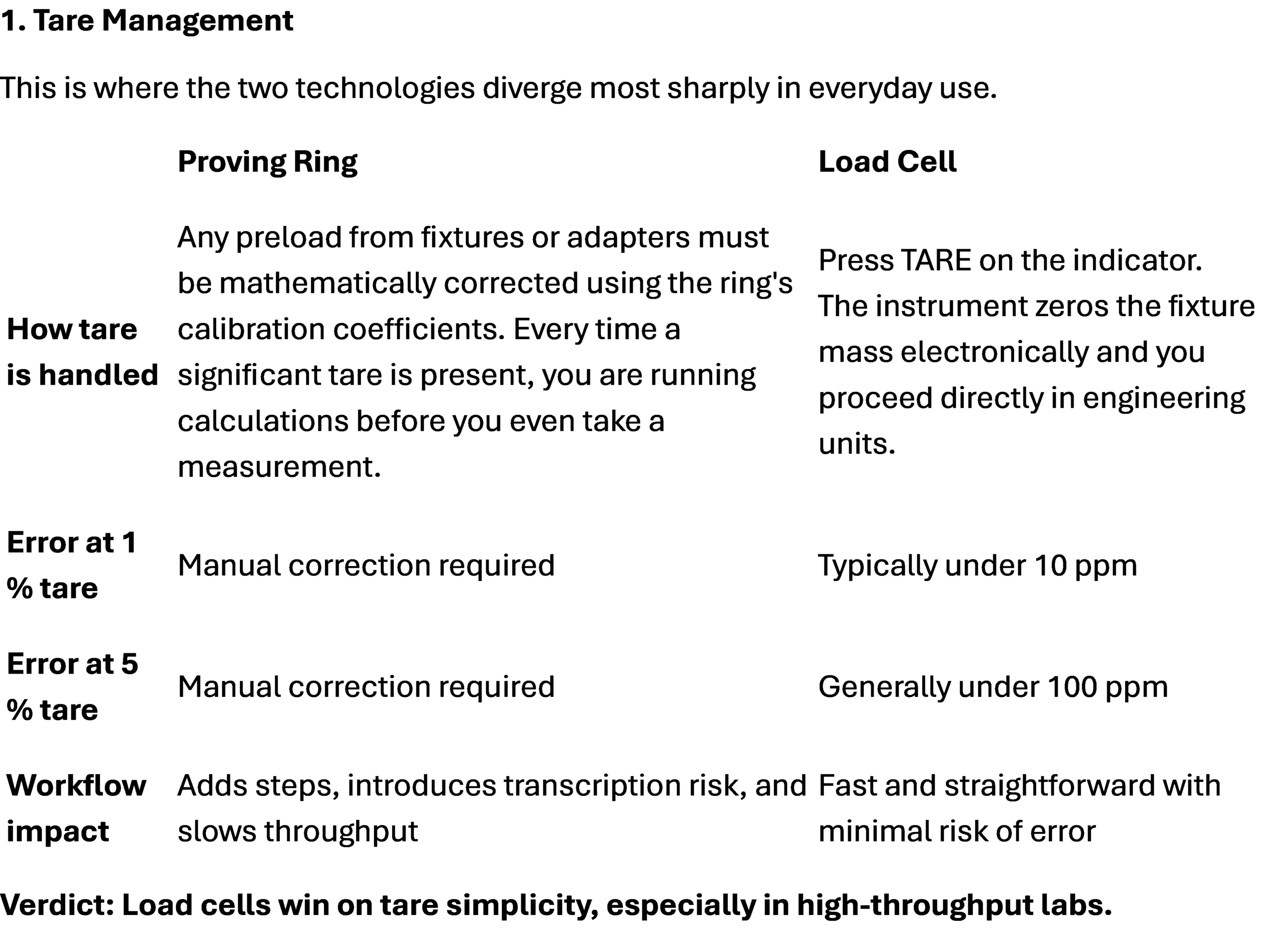
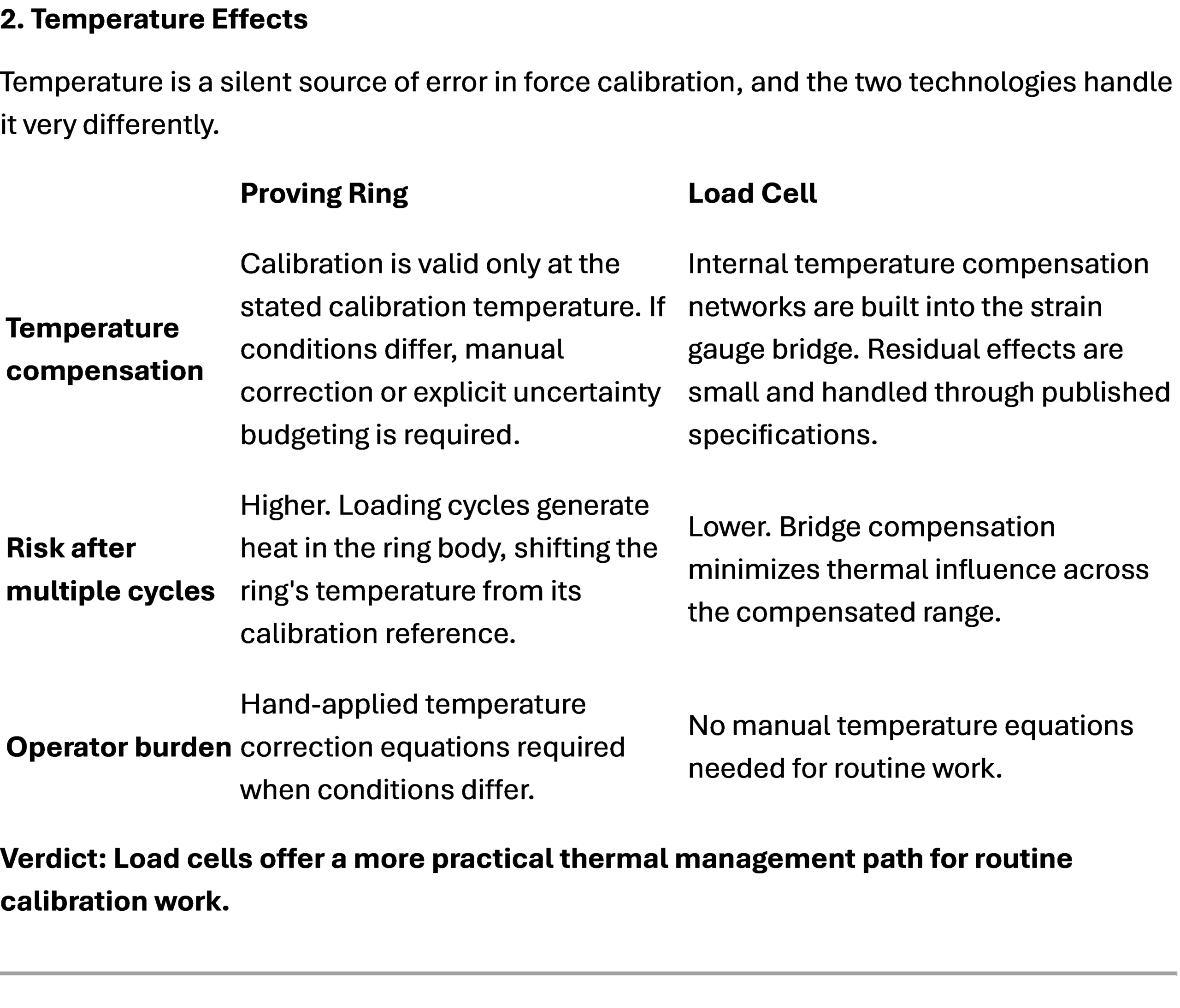


Varying Load Cell Types: Strengths and Limitations.

Do Not Overlook the Full System
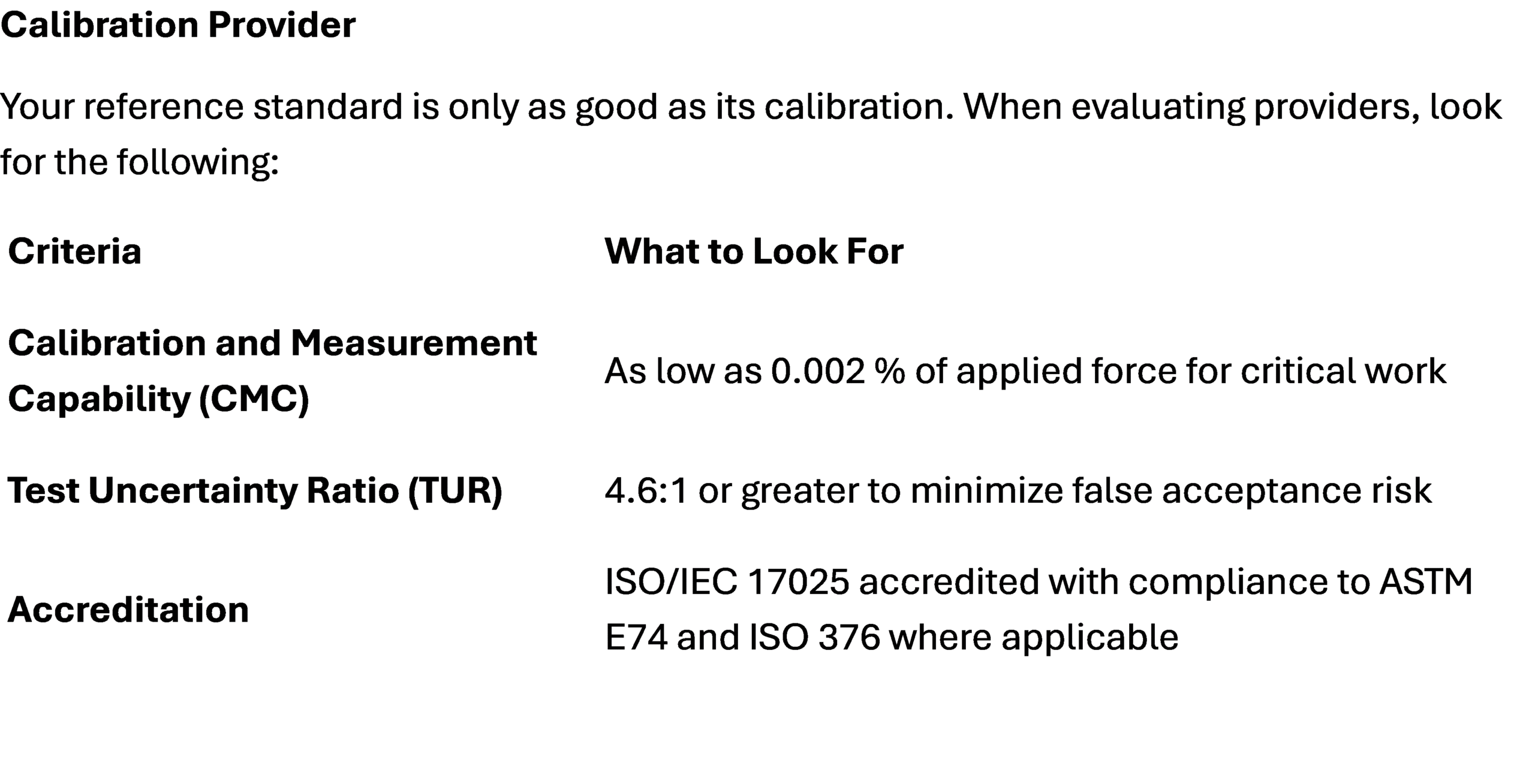
Choosing the transducer is only part of the decision. The indicator, adapters, and calibration provider all play an equally important role in achieving low measurement uncertainty.
The Indicator
For the highest accuracy, choose an indicator capable of applying polynomial coefficients. The Morehouse 4215 Plus and C705P are examples that mathematically correct for the load cell's non-linear response and significantly reduce measurement bias. Resolution, stability, and environmental suitability all factor in as well.
Adapters
Correct alignment is critical. Spherical alignment adapters in compression force applications ensure force is applied along the correct axis. ISO 376 explicitly highlights the role of adapters in measurement reproducibility. Using a load cell without proper adapters can introduce errors of 0.1-2 %, negating much of the accuracy advantage you chose the load cell for.
Bottom Line
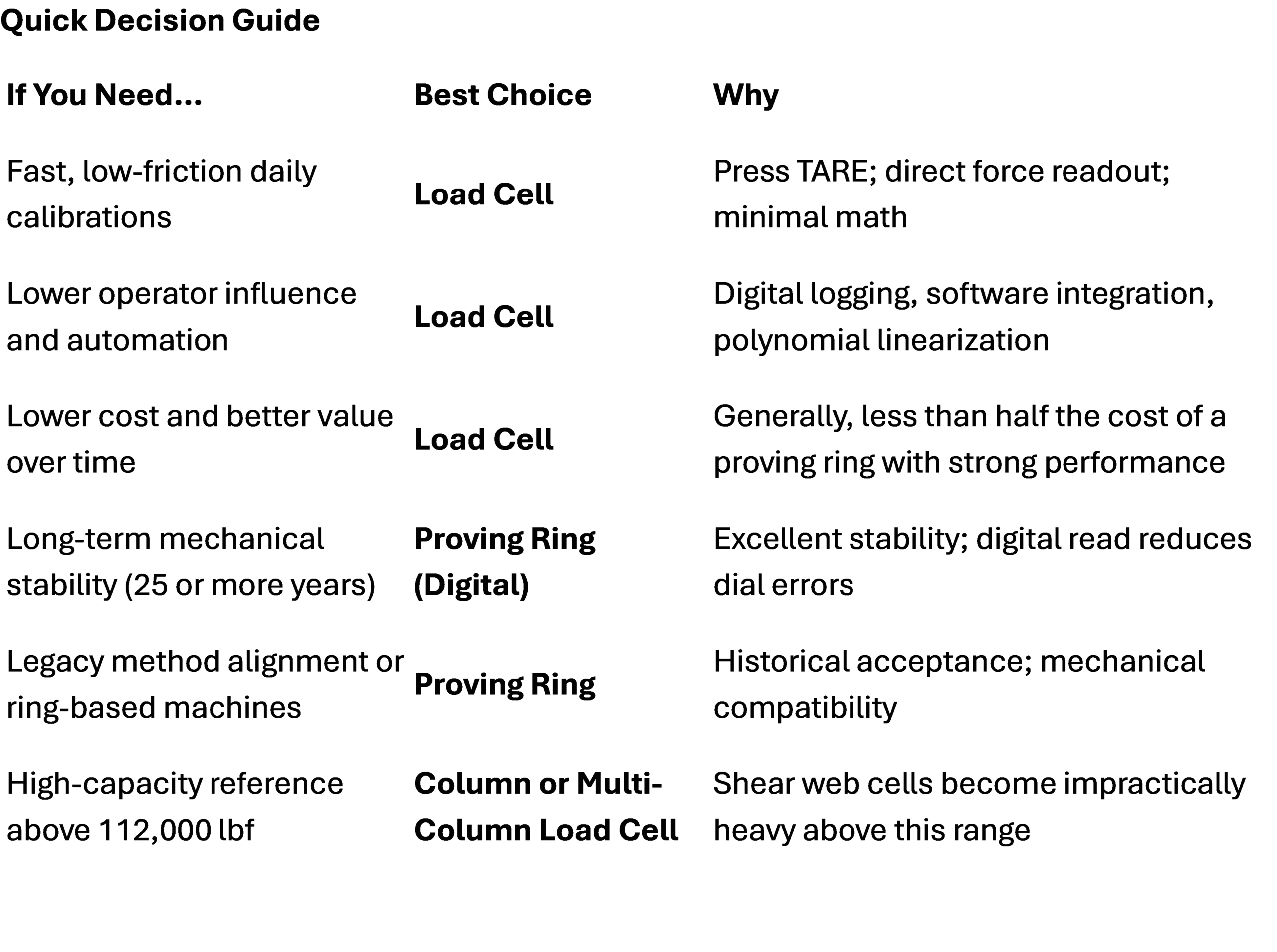
For most modern calibration laboratories, a master load cell with a high-quality digital indicator delivers the best combination of accuracy, speed, operator independence, and workflow efficiency. The built-in temperature compensation, simple tare handling, and direct digital readout remove several sources of error that analog proving rings carry by design. Add to that the significantly lower cost, and the case for load cells in routine calibration work is compelling.
Proving rings remain highly capable and respected instruments, particularly in legacy force applications, as check standards, or where exceptional mechanical longevity is the priority. If you go the proving ring route, choose digital over analog every time.
Whatever path you choose, pay equal attention to your indicator, your adapters, and your calibration provider. The best transducer in the world will underperform if any of those three elements are not matched to it properly.
How to Choose Between a Proving Ring and a Load Cell for Force Calibration Conclusion
About Morehouse
We believe in changing how people think about Force and Torque calibration in everything we do, including, "How to Choose Between a Proving Ring and a Load Cell for Force Calibration."
This includes setting expectations and challenging the "just calibrate it" mentality by educating our customers on what matters and what may cause significant errors.
We focus on reducing these errors and making our products simple and user-friendly.
This means your instruments will pass calibration more often and produce more precise measurements, giving you the confidence to focus on your business.
Companies around the globe rely on Morehouse for accuracy and speed.
Our measurement uncertainties are 10-50 times lower than the competition, providing you with more accuracy and precision in force measurement.
We turn around your equipment in 7-10 business days so you can return to work quickly and save money.
When you choose Morehouse, you're not just paying for a calibration service or a load cell.
You're investing in peace of mind, knowing your equipment is calibrated accurately and on time.
Through Great People, Great Leaders, and Great Equipment, we empower organizations to make Better Measurements that enhance quality, reduce risk, and drive innovation.
With over a century of experience, we're committed to raising industry standards, fostering collaboration, helping with understanding risk, and delivering exceptional calibration solutions that build a safer, more accurate future.
Contact Morehouse at info@mhforce.com to learn more about our calibration services and load cell products.
Email us if you ever want to chat or have questions about a blog.
We love talking about this stuff. We have many more topics other than, "How to Choose Between a Proving Ring and a Load Cell for Force Calibration."
Our YouTube channel has videos on various force and torque calibration topics here.
# How to Choose Between a Proving Ring and a Load Cell for Force Calibration