

The Honest Answer that May Have Cost us a Million Dollars: Why Trustworthy Calibration Services Matter
“You can’t handle the truth!” – Colonel Jessup, A Few Good Men
Colonel Jessup was wrong about most things, but he was onto something: the truth is not always what people want to hear. Not long ago, a prospective customer asked Morehouse for the truth about their force measurement system. The honest answer may have cost us an opportunity in the range of one million dollars. The order was never guaranteed, but our answer took us out of the running on purpose.
We want to tell you that story because it says more about who we are than any brochure ever could. To understand why we made that call without blinking, you also need to know a little about where we come from.

Figure 1. Hoist rigging showing the load pin location and the variable suspended rope length.
A Crane, a Load Pin, and a Suspicious Sine Wave
The customer operates ship-to-shore container cranes. A load pin mounted at the hoist rigging near the spreader measures the load on the wire ropes as containers are lifted and lowered. They asked whether Morehouse could supply a more accurate load pin than the brand they were using.
Could we? Yes. Load pin design and manufacturing is squarely in our wheelhouse. But before taking the order, we asked them to share the application details and the data.
The Load Pin was Telling the Truth
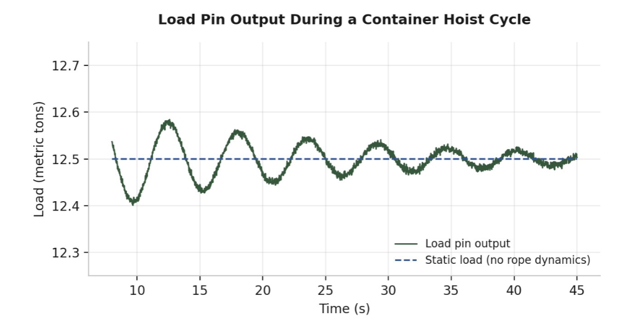
Figure 2. Load pin output during a hoist cycle. The oscillation appears once the container is lifted clear and damps out over time.
The data showed a clear, repeating sine wave riding on top of an otherwise stable output signal each time a container was hoisted. The technicians on site assumed it was unstable data from a bad load pin. Here is the problem with that theory: the oscillation had a consistent period, it appeared at the same point in every hoist cycle, and it decayed gradually rather than cutting off sharply.
Random noise does not keep a schedule.
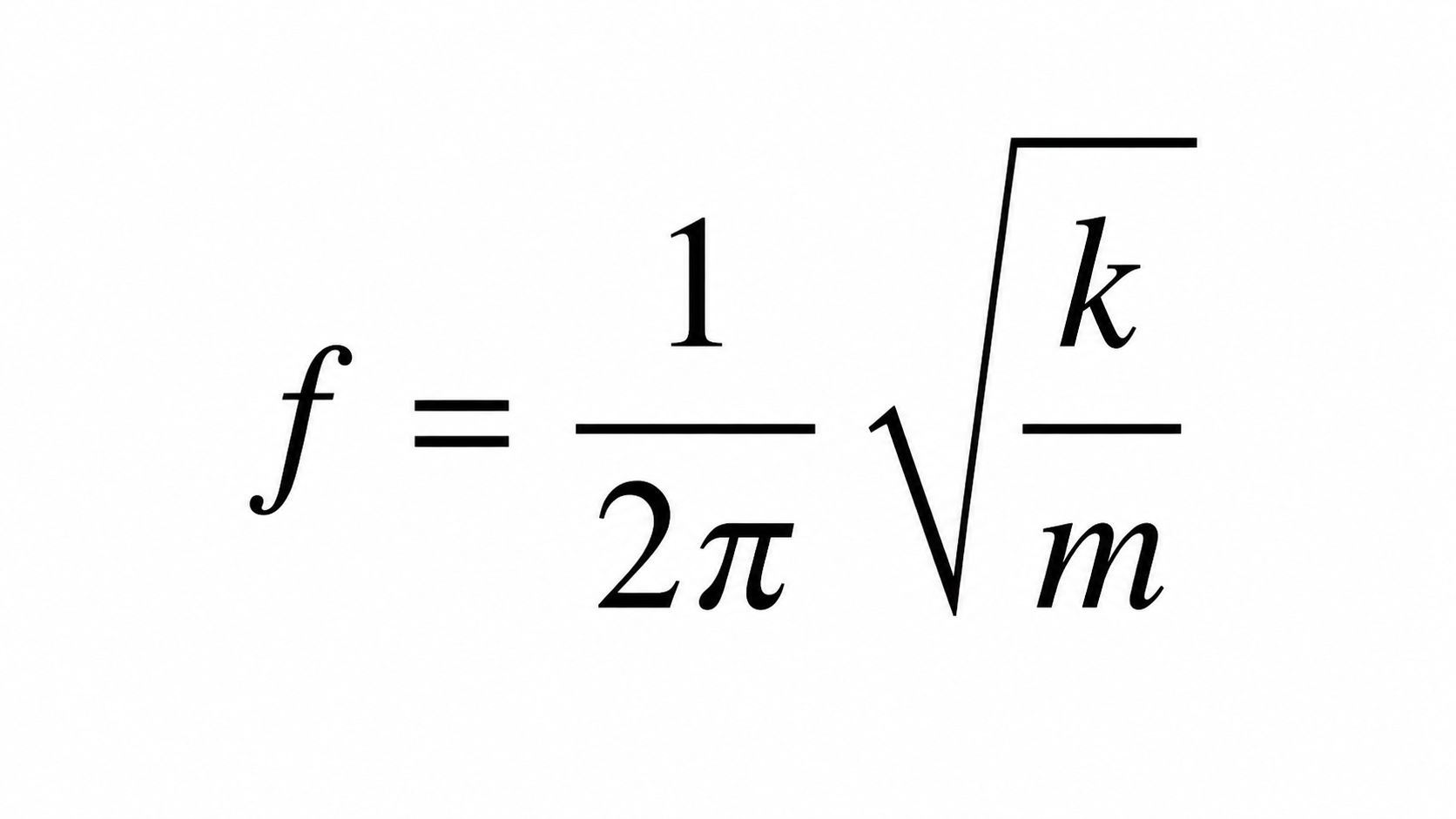
A suspended wire rope under load behaves as an axial spring. Combine that spring with the mass of the container and spreader and you have a spring-mass system with a natural frequency of f = 1/(2π) × √(k/m), where k is the effective axial stiffness of the suspended rope and m is the suspended mass. As the container lifts higher, the suspended rope length increases, the stiffness drops, and the natural frequency falls.
That is exactly what the data showed. The measured oscillation frequency tracked the calculated natural frequency of the rope and load system across the crane’s normal range of suspended rope lengths.
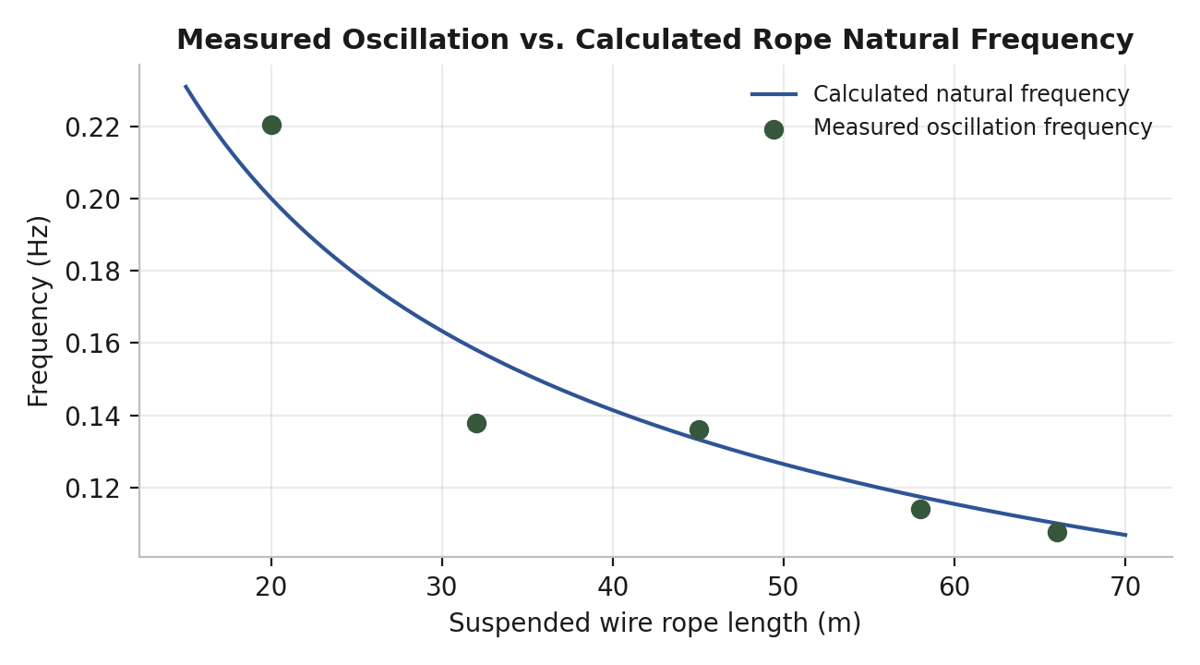
Figure 3. Measured oscillation vs. calculated rope frequency.
The load pin was not adding noise to the signal. It was reporting a real, physical oscillation in the force applied to it. A more accurate load pin would have reported the same sine wave, only with better paperwork.
So we recommended against the replacement. We explained the mechanism instead: suspended rope length, hoist speed, damping technique. Then we watched a potential seven-figure opportunity sail away like a loaded container ship.
“Help me help you,” as Jerry Maguire put it. Sometimes helping means not selling.
Why a 106-Year-Old Company can Afford the Truth
It is only simple if you take the long view, and Morehouse has been taking the long view since 1920, when William S. Morehouse founded the Morehouse Machine Company as a local machine shop in York, Pennsylvania. One of his skilled machinists was Harry E. Zumbrun. Harry learned and perfected his trade working on airplanes during WW1. Finding ways to get a crashed plane up and running quickly.
At that time, demand for boilers and steam engines was booming. So, unfortunately, were the boilers. Materials were not controlled, testing methods were subpar, and catastrophic failures followed.
Did the manufacturers know the proper requirements? Did they have the right equipment to measure force? Did they follow documented processes? Too often the answer was no, three times over.
Morehouse worked with the National Bureau of Standards to solve the problem. The result was the Morehouse Proving Ring, which standardized applied force, allowed more accurate calibration of Brinell hardness testers, and gave industry a way to measure material strength it could trust. More than a century later, that is still the job: give people measurements they can trust, even when the answer is inconvenient.
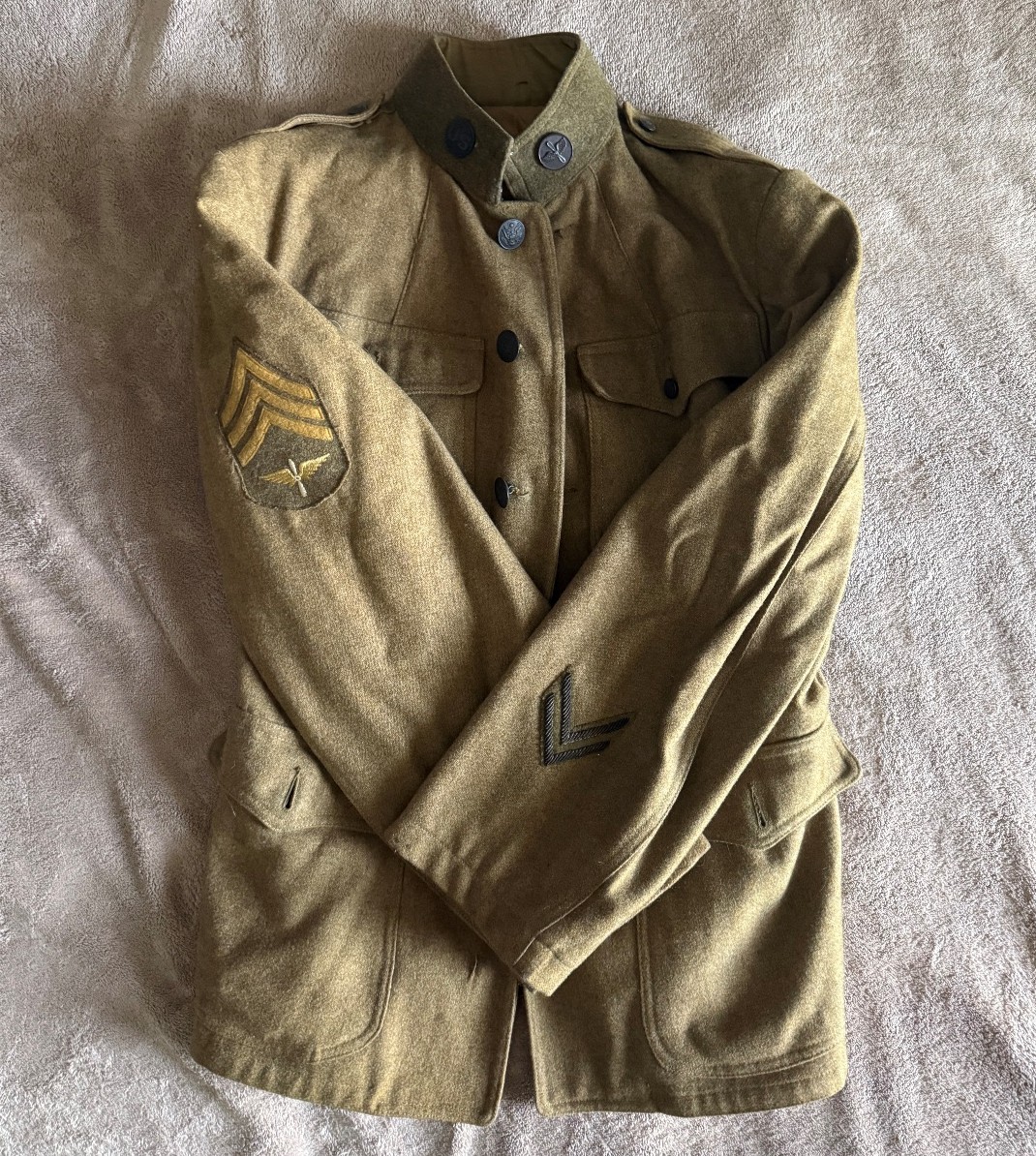
Figure 4. Harry E. Zumbrun's Service Uniform.
Trust Compounds like Interest
Reputation is not a plaque on the wall. It is a series of reinvestments, in equipment and in honesty.
In 2004, Morehouse built a 120 000 lbf deadweight machine with an expanded uncertainty of 0.0016 % of applied force (k = 2, approximately 95 % confidence). In 2010, we built our torque laboratory around a primary torque standard from the National Physical Laboratory in England — a machine originally funded by British taxpayers that we acquired for a fraction of what it cost to build, and then built our own laboratory around. In 2011, we constructed a universal calibrating machine capable of calibrating force up to 2 250 000 lbf (10 MN). In the years since, we have developed portable calibrating machines, adapter kits, clevis assemblies, quick-change tension members, torque arms, better load cells, and a new six-channel meter, all of it driven by listening to customers first.
The same math applies to trust. A supplier willing to sell a replacement part into a problem the part cannot fix gets one sale. A partner who diagnoses the actual cause keeps a customer’s trust, and that customer’s next ten applications. The opportunity we walked away from on that crane was real, even if the order was never a sure thing. So is the value of being the company a customer calls when a measurement does not look the way they expect.
The Promise
Our purpose is simple: we create a safer world by helping companies improve their force and torque measurements. That starts with listening, and it ends with the most honest answer we can give, whether or not it comes with an invoice.
So here is my call to action. If your force or torque data looks strange, do not assume the sensor is lying. Send us the data and the application details, and we will tell you the truth about what we see, even if the truth is “keep the load pin you have.”
Stay informed with weekly metrology insights by subscribing here.
Questions? Reach our team at info@mhforce.com or connect with us on LinkedIn
-Henry Zumbrun, Morehouse Instrument Company
About Morehouse
We believe in changing how people think about Force and Torque calibration in everything we do, including, "Why Trustworthy Calibration Services Matter"
This includes setting expectations and challenging the "just calibrate it" mentality by educating our customers on what matters and what may cause significant errors.
We focus on reducing these errors and making our products simple and user-friendly.
This means your instruments will pass calibration more often and produce more precise measurements, giving you the confidence to focus on your business.
Companies around the globe rely on Morehouse for accuracy and speed.
Our measurement uncertainties are 10-50 times lower than the competition, providing you with more accuracy and precision in force measurement.
We turn around your equipment in 7-10 business days so you can return to work quickly and save money.
When you choose Morehouse, you're not just paying for a calibration service or a load cell.
You're investing in peace of mind, knowing your equipment is calibrated accurately and on time.
Through Great People, Great Leaders, and Great Equipment, we empower organizations to make Better Measurements that enhance quality, reduce risk, and drive innovation.
With over a century of experience, we're committed to raising industry standards, fostering collaboration, helping with understanding risk, and delivering exceptional calibration solutions that build a safer, more accurate future.
Contact Morehouse at info@mhforce.com to learn more about our calibration services and load cell products.
Email us if you ever want to chat or have questions about a blog.
We love talking about this stuff. We have many more topics other than, "Why Trustworthy Calibration Services Matter"
Our YouTube channel has videos on various force and torque calibration topics here.