

Obsolete Units of Measurement: Gone but Not Forgotten
On May 20, 2019, a small cylinder of platinum and iridium sitting in a vault outside Paris was let go, kind of.
No severance. No farewell lunch. It had defined mass for the entire planet for 130 years, and it found out it was redundant the way most of us do: a committee voted.
That cylinder was Le Grand K, the International Prototype of the Kilogram. Its retirement got me thinking about all the other obsolete units of measurement that have been sent out to pasture. Some were killed by science. Some were killed by politics. One was invented by fraternity brothers on a bridge and, to this day, refuses to die. Another, the ugga dugga, was born in an auto shop and never had a job to lose. More on both later.
Metrology is supposed to be the most stable profession on earth. We exist so a pound in York means the same thing as a pound in Yokohama. Yet units come and go like neckties. Why do they die? Who decides? And should you worry that the pound-force is next?
Short answer: no. Long answer: keep reading.
A quick note on spelling before we start. The BIPM, which keeps the SI, writes metre and caesium. NIST, which keeps us honest here in the US, writes meter and cesium. For SI units, I use the BIPM spellings, partly because most of these units were born in France and partly to keep readers on both sides of the pond guessing. The values are identical either way. Only the letters moved, and this is not a debate over the proper spelling of adapter or adaptor.
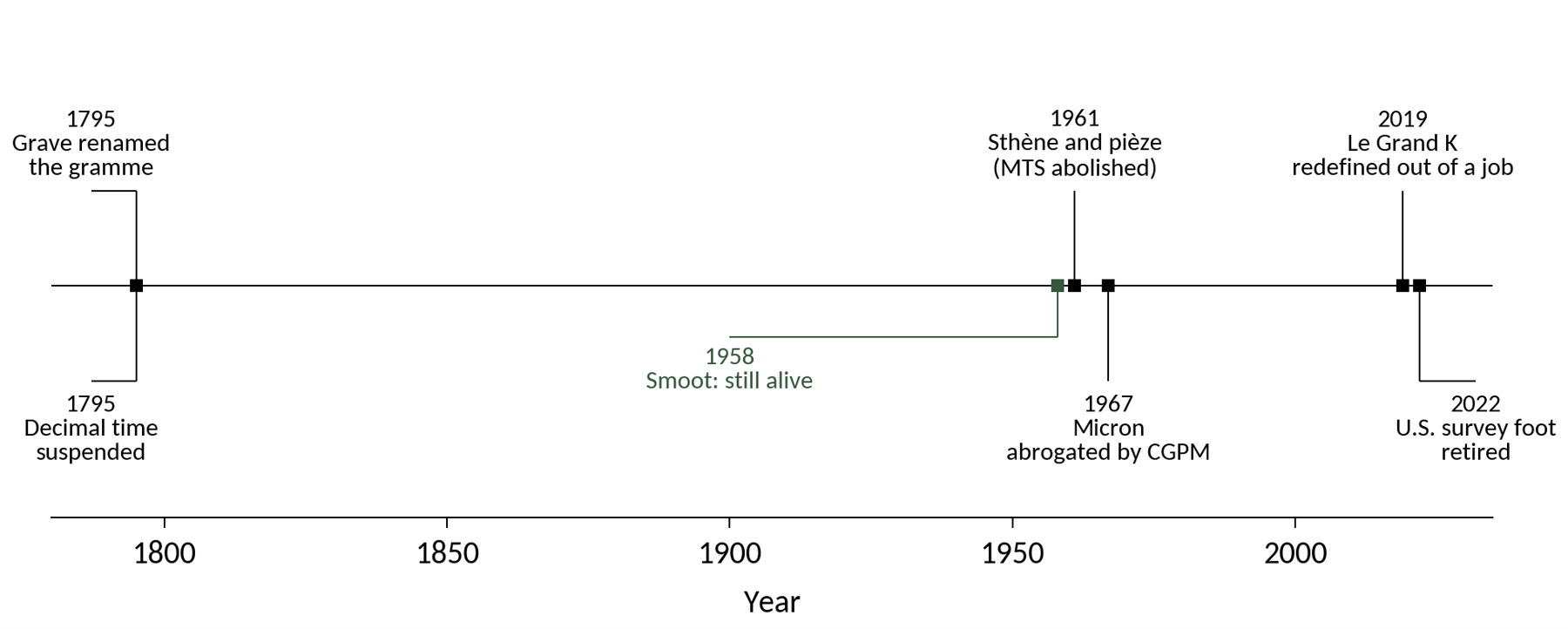
Figure 1. Retirement dates of six obsolete units of measurement, and the one still painted on a bridge (n = 7).
Le Grand K Gets a Gold Watch, Sort Of
Le Grand K was adopted in 1889 and kept under three nested glass bell jars, inside a vault that needed three keys held by three different people. That is more security than most of us give our retirement accounts.

Figure 2. A replica of Le Grand K at the Cité des Sciences et de l'Industrie, Paris. The real one does not take visitors (n = 1). Photo: Japs 88, via Wikimedia Commons.
The problem was simple. Every kilogram on Earth traced back to one object, and that object was not behaving. Compared with its official copies, it drifted by roughly 50 µg over a century. That is a relative change of about 5 × 10⁻⁸. Was the prototype losing mass, or were the copies gaining it? Nobody could say for sure, because by definition the prototype could not be wrong. It was exactly 1 kg on the day it was adopted, exactly 1 kg after a cleaning, and exactly 1 kg if someone sneezed on it.
Picture a doctor whose thermometer is the definition of 37 °C. Your fever is impossible. The thermometer says so.
The General Conference on Weights and Measures voted in November 2018, and on May 20, 2019, the kilogram was redefined by fixing the Planck constant at exactly 6.626 070 15 × 10⁻³⁴ J·s. Le Grand K still exists. It just lost its title. Do not call it a paperweight, though. It still sits under its three bell jars at the BIPM in Sèvres, and it still clocks in.
Retired is not the same as unemployed. The Planck constant was fixed at the value that made the new kilogram match Le Grand K, so on the day of the change the prototype was assigned a mass of 1 kg with a standard uncertainty of 10 µg. It went from being the definition to being one of the best-characterized kilograms on Earth. For the first two years, the BIPM kept disseminating mass through working standards that trace straight back to Le Grand K, while the Kibble balance and silicon-sphere labs compared notes. In 2021, dissemination moved to a consensus value from those new realizations. Meanwhile, its six official copies and dozens of national prototypes are still in service, and many national labs still keep a platinum-iridium kilogram as their primary mass standard. If you calibrated a weight any time between 1889 and 2019, its traceability runs through that cylinder. The definition moved on. The paperwork did not.
Where it sits in SI today. The kilogram is defined by fixing the Planck constant, with the second already set by the caesium-133 transition and the metre by the speed of light. Written out, 1 kg = h / (6.626 070 15 × 10⁻³⁴) m⁻²·s. Le Grand K is now an ordinary mass artifact. It gets measured against the definition instead of being the definition, and for the first time in its life it can be wrong.
Simple, right? Maybe simpler than deriving force or torque from mass, length, and time.
The Grave: Killed by a Bad Name
Before there was a kilogram, there was the grave. In 1793 the French revolutionary government defined a unit of mass as the mass of a cubic decimetre of water at the melting point of ice. They called it the grave, from the Latin gravitas. One thousandth of a grave was a gravet.
One popular explanation for what happened next: grave sounded a little too much like Graf, a German title of nobility. In 1793 France, sounding like a nobleman was a serious health hazard. Historians argue over how much that mattered, but by 1795 the grave was out and the gramme was in, with the kilogramme as its big brother.
Where it sits in SI today. The grave was the mass of 1 dm³ of water at 0 °C. Water at that temperature has a density of about 999.84 kg/m³, so one grave is about 0.999 84 kg. The kilogram inherited the job and gained about 0.16 g in the process, which is more than most of us can say about our own promotions.
I find this comforting. All of us have written a procedure where a perfectly good word got rejected in review. At least our reviewers do not own a guillotine.
Ten-Hour Days, and Nobody Showed Up
While they were at it, the French decimalized time. In 1793 they decreed that a day would have 10 hours, each hour 100 minutes, and each minute 100 seconds. Let us do the math, because that is what we do.
A standard day has 86 400 s. A decimal day has 10 × 100 × 100 = 100 000 decimal seconds. One decimal second is 86 400 s / 100 000 = 0.864 s. One decimal minute is 86.4 s. One decimal hour is 8640 s, or 2 h 24 min.
So 5 o'clock decimal was noon. A meeting at 4 o'clock decimal was 9:36 in the morning. Clockmakers had to build new faces, and everyone had to relearn how to be late.
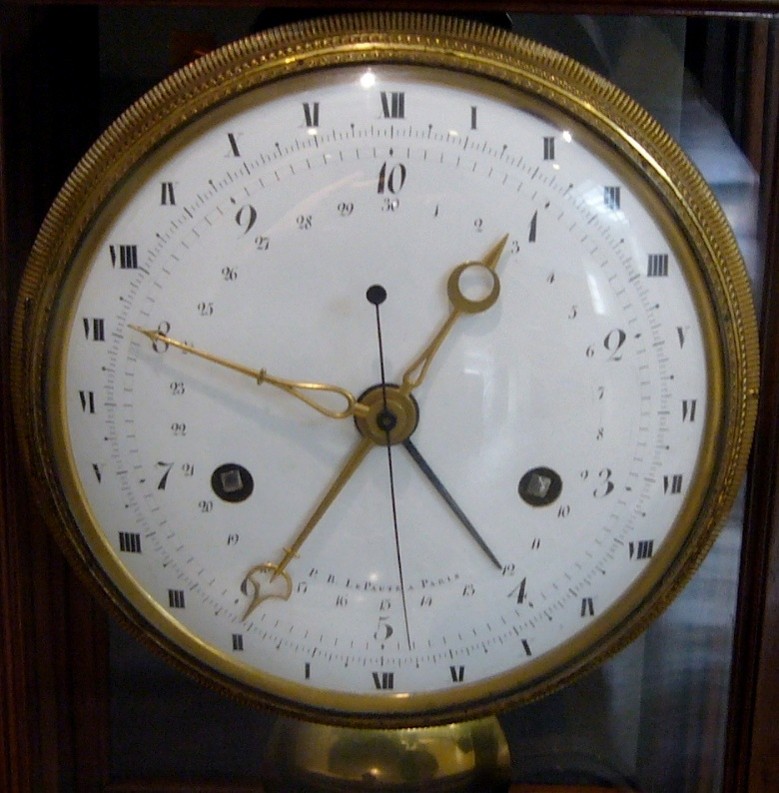
Figure 3. A clock made in Revolutionary France with a 10-hour decimal dial. Noon is at 5 (n = 1). Photo: Cormullion, via Wikimedia Commons, CC BY-SA 3.0.
Can you imagine telling a technician the calibration is due at half past 7? Can you imagine calculating overtime? Can you imagine explaining it to your auditor?
The revolutionary calendar also replaced the week with the décade, ten days long. Our typical turnaround at Morehouse is 7 to 10 days, which means we have been quietly quoting in décades for years. Vive la révolution.
Where it sits in SI today. The second is the duration of 9 192 631 770 periods of the radiation from the ground-state hyperfine transition of the caesium-133 atom. A decimal second is 0.864 of that, or 7 942 433 849.28 periods. Make your technicians memorize that number if you want them to quit.
Decimal time was decreed in October 1793, became mandatory on September 22, 1794, and had its mandatory use suspended on April 7, 1795. That is about six and a half months of actual service. You can overthrow a government in an afternoon. You cannot change when people want lunch.
Force Units We Stopped Inviting to Parties
This is a force company, so let me pay my respects to the force units that did not make it.
The Sthène
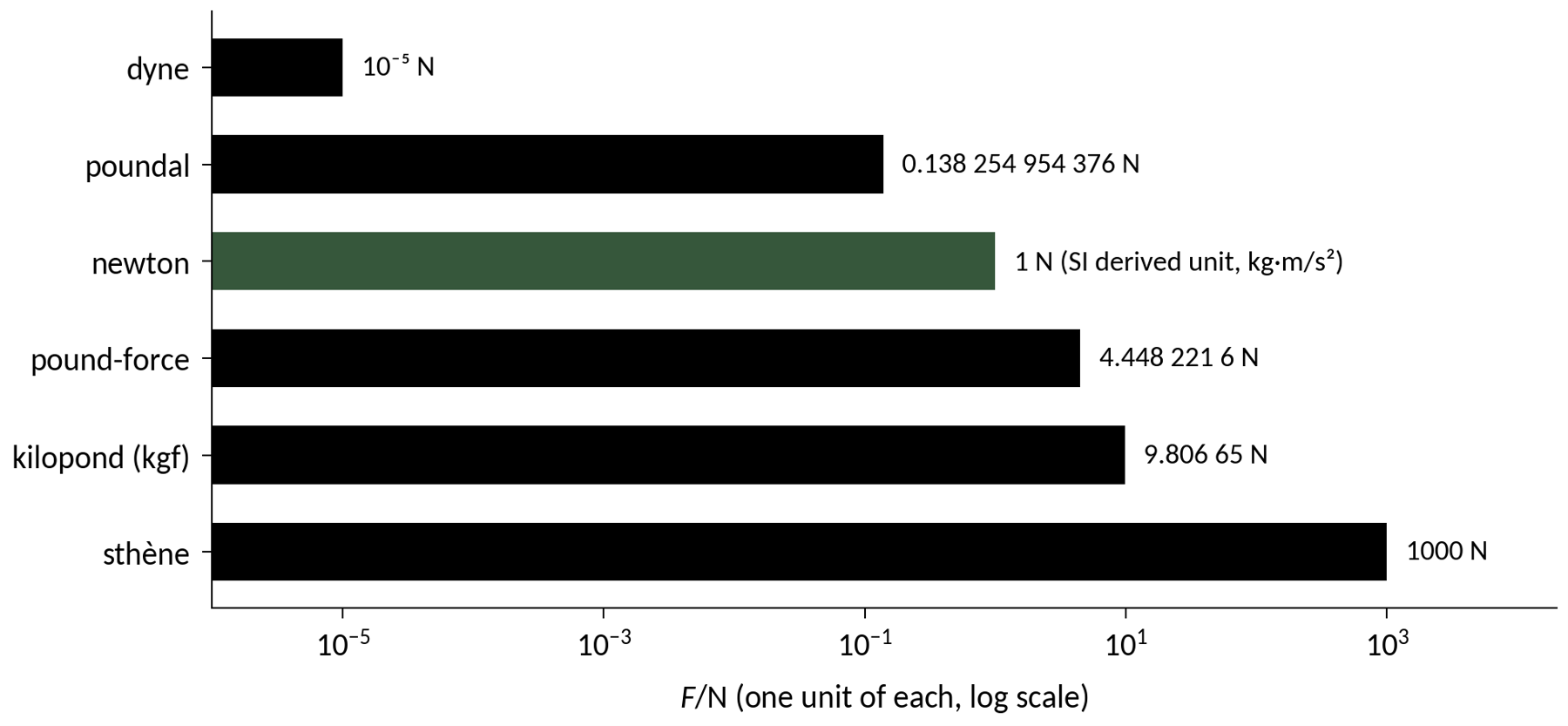
France ran on a metre-tonne-second system from 1919 until 1961. Its unit of force was the sthène: the force that accelerates one tonne at 1 m/s². That works out to exactly 1000 N, or 1 kN. Every 10 kN load cell on our floor is secretly a 10 sthène load cell. Please do not tell them. Load cells are sensitive enough already.
The same system gave us the pièze, a pressure of one sthène per square metre, or 1 kPa. It sounds like something you order at a bakery, and it is about as likely to show up on a calibration certificate.
Where it sits in SI today. The newton is the SI derived unit of force, 1 N = 1 kg·m/s². One sthène is 1000 kg × 1 m/s² = 1000 N exactly. One pièze is 1000 N/m² = 1 kPa. Both were coherent within the MTS system, not SI: each converts to SI by an exact factor of 1000. They just lost the naming contest.
The Kilopond
The kilopond, also known as the kilogram-force (kgf), is defined as exactly 9.806 65 N. SI should have finished it off decades ago. Instead it is the cockroach of force units. It still turns up on testing machine dials, hardness testers, old procedures, and the occasional purchase order.
Here is the part that is not a joke. The kilogram-force is defined using standard gravity, 9.806 65 m/s². Your lab is not at standard gravity. Gravity on Earth's surface runs from about 9.780 m/s² at the equator to about 9.832 m/s² at the poles. A mass that produces 1 kgf at standard gravity produces about 0.27 % less force at sea level on the equator. If your deadweights were never adjusted for local gravity and air buoyancy, the kilopond is not the only thing that needs retiring.
Where it sits in SI today. 1 kgf = 1 kg × gₙ, where gₙ = 9.806 65 m/s² is the standard acceleration of gravity the CGPM adopted in 1901. The value is exact by definition. A definition, however, is not a gravimeter.
The Poundal
The poundal was the British engineer's attempt to be coherent. One poundal accelerates one pound of mass at 1 ft/s², which makes it exactly 0.138 254 954 376 N. One pound-force is about 32.174 poundals. The poundal failed for the most British reason possible: everyone was too polite to use it.
Where it sits in SI today. 1 pdl = 0.453 592 37 kg × 0.3048 m/s² = 0.138 254 954 376 N. For comparison, 1 lbf = 0.453 592 37 kg × 9.806 65 m/s² = 4.448 221 615 260 5 N. Both are exact because the pound and the foot have been defined from the kilogram and the metre since 1959, and gₙ has been exact by convention since 1901.
The Dyne
The dyne is still technically defined in the CGS system, but nobody invites it anywhere. One dyne is 10⁻⁵ N. A 10 000 lbf load cell would read about 4.448 × 10⁹ dyn at capacity. I would love to see the indicator with that many digits. I would not want to calibrate it.
Where it sits in SI today. 1 dyn = 1 g·cm/s² = 10⁻³ kg × 10⁻² m/s² = 10⁻⁵ N. Coherent in CGS, a rounding error in SI.
The Cubit and the Full Moon
The Egyptian royal cubit ran from about 523 mm to 529 mm, based roughly on the length from the elbow to the tip of the middle finger, plus one extra palm for royalty. Whose elbow? Whose finger? That is the whole problem, and it is why we have standards.
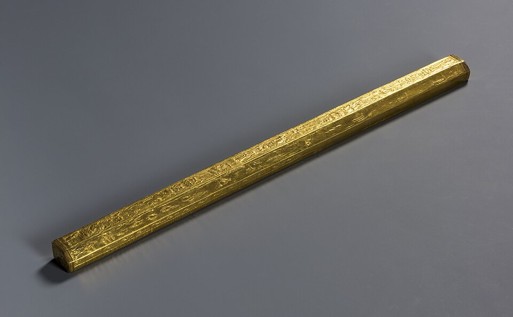
Figure 5. The royal cubit rod of Kha, inscribed with the name of Amenhotep II, Museo Egizio, Turin. One elbow, officially sanctioned (n = 1). Photo: Museo Egizio, via Wikimedia Commons.
There is a story metrologists love to tell. Builders had to bring their cubit sticks to be compared against the royal master cubit at every full moon, and anyone who forgot faced the death penalty. I have heard this story at more conferences than I can count. I have never seen a primary source for it.
Think about that. An unverified claim, no traceability, repeated until everybody believes it. It might be the most metrology story of all.
Politicians figured this out long before we did. Say something often enough, and it becomes true. The approach works for cubit stories and campaign promises. The claims have excellent repeatability. Reproducibility is still pending.
Where it sits in SI today. There is no SI cubit. The metre is defined by fixing the speed of light at 299 792 458 m/s, which has the advantage of not changing when the pharaoh does. Surviving cubit rods measure about 0.523 m to 0.529 m, a spread of roughly 1.1 %. Any lab with a 1.1 % spread between its reference standards would not be accredited for long.
Our recall notices at Morehouse are far less dramatic. We send an email.
The Survey Foot Surveyed Itself Out of a Job
From 1959 until the end of 2022, the United States had two feet. The international foot is exactly 0.3048 m. The U.S. survey foot was 1200/3937 m, or about 0.304 800 61 m. That explains a lot about how this country stands on the metric system.
The difference is about 2 parts in a million. Over a mile, it adds up to roughly 3.2 mm. Does that matter for your driveway? No. Does it matter for state plane coordinates that run into the millions of feet? Yes, by several feet, and several feet is exactly how surveyors and lawyers both stay employed.
Where it sits in SI today. Both feet were derived from the metre, just at different times. The survey foot comes from the Metric Act of 1866, which gave 1 m = 39.37 in, and the 1893 Mendenhall Order, which made the metre the fundamental U.S. standard. That gives 1 ft = 1200/3937 m. The international foot comes from the 1959 agreement that set 1 ft = 0.3048 m exactly. The ratio between them is 1.000 002. Two definitions for one word is how you end up with two feet.
NIST and NOAA retired the survey foot at the end of 2022. As far as I know, it did not get a gold watch either.
The Micron, Canceled by Committee
The micron did nothing wrong. It was short, friendly, and easy to say. In 1967 the General Conference on Weights and Measures abolished it anyway, because its symbol, µ, was a prefix with no unit attached. The proper name is the micrometre, µm.
That is the metrology equivalent of being fired for violating the dress code. If you say micron in a machine shop, nobody will blink. If you say it in front of a NIST SP 811 reviewer, bring a helmet.
Where it sits in SI today. 1 µm = 10⁻⁶ m. Same length, new name. The prefix micro attaches to the base unit metre, and the committee sleeps soundly.
Honorable Mentions
Some units retired quietly. Others were never really employed in the first place. Physics students still pass around the furlong-firkin-fortnight system as a joke. In those units, the speed of light is about 1.803 × 10¹² furlongs per fortnight. I checked the math so you do not have to. Here are a few more obsolete units of measurement that deserve a moment of silence.

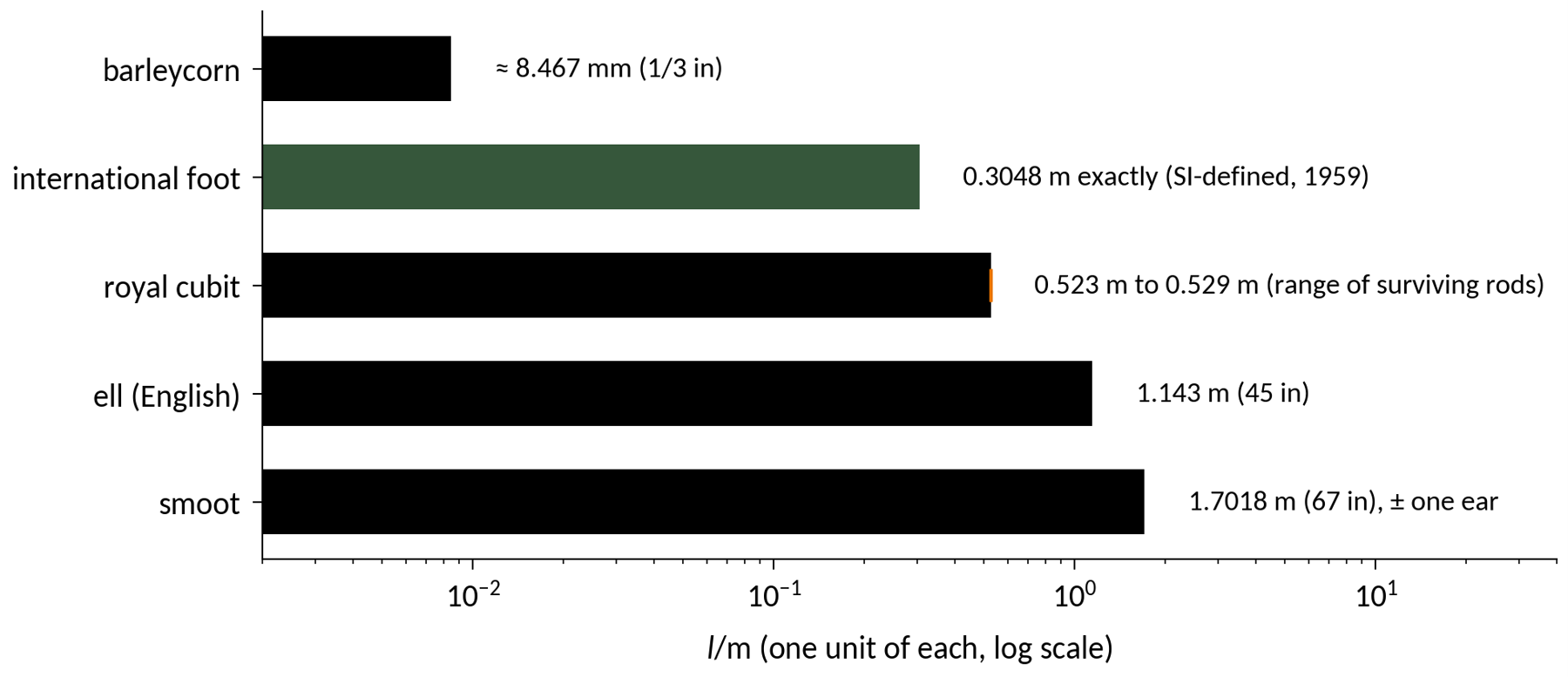
Figure 6. One unit of each length unit in metres on a log scale. The cubit is shown as the range of surviving rods, not a measurement uncertainty (n = 5).
The Barleycorn: Not Dead, Just Hiding in Your Shoe
The barleycorn deserves more than one row in a table. It is the oldest unit on this list that still reports for duty every morning, and most people wear it without knowing.
The definition comes from an English statute, the Composition of Yards and Perches: three grains of barley, dry and round, make an inch. Twelve inches make a foot, and three feet make a yard. Historians date it to somewhere between 1266 and 1303. Many accounts, including a NIST blog, credit Edward II in 1324 instead, so treat that date the way you would treat a cubit story. Popular, plausible, and not something I would put on a certificate.
Think about what that definition asks of you. Which barley? Whose field? Which harvest? A wet summer gives you a fatter grain. To be fair, "dry and round" is an environmental condition and an acceptance criterion in three words. For the 13th century, that is not bad. Some procedures I review today state neither.
Then the shoemakers got hold of it. The first written description of English shoe sizes, in Randle Holme's Academy of Armory (1688), actually steps in quarter inches. By 1856, when Robert Gardiner published The Illustrated Handbook of the Foot, the step was one barleycorn, and it stuck. Each full shoe size in the UK and US systems is one barleycorn, 1/3 in, longer than the one before it. A half size is half a barleycorn. Children's sizes run up to 13½ and then start over at adult size 1, half a barleycorn later. Restart a scale in the middle with no note, and an assessor would write you up. Shoe stores have done it for more than 150 years.
The barleycorn also has a classic metrology problem: an unknown offset. Sizes are tied to the last, the form a shoe is built on, not to your foot, and each manufacturer picks its own allowance for toes and comfort. That is why you can be a 10 in one brand and a 10½ in another. The resolution is the same. The offset is not. Every lab has seen this one. The slope is fine; the zero is the problem.
The metric world tried to fix it. ISO 9407 defines Mondopoint, which sizes shoes by foot length and width in millimetres. You will find it on ski boots and many military boots, where a bad fit has real consequences. Everywhere else, we kept counting grains of barley.
Where it sits in SI today. 1 barleycorn = 1/3 in = 25.4 mm / 3 = 8.466 666… mm, exact since the inch was fixed at 25.4 mm in 1959. The decimals repeat forever, which suits a unit that will not leave. A half size is about 4.233 mm, which is the resolution of the scale. Treat it as a rectangular distribution and resolution alone contributes a standard uncertainty of 4.233 mm / √12 ≈ 1.2 mm, before anyone accounts for the offset between the last and your foot. Most people walk around with that uncertainty and never complain.
So the barleycorn is not retired. It is working under an assumed name. The next time someone asks your shoe size, give it to them in barleycorns. Then ask about the traceability.
The One That Refused to Die
In October 1958, MIT fraternity pledge Oliver Smoot lay down on the Harvard Bridge, got up, and lay down again, over and over, while his brothers marked his length in paint. Smoot stood 5 feet 7 inches tall. The bridge measured 364.4 smoots, plus or minus one ear.
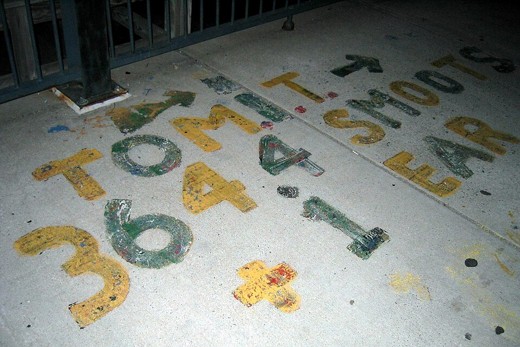
Figure 7. The 364.4 smoot sign on the Harvard Bridge. The ear is not shown (n = 1). Photo via Wikimedia Commons, CC BY 2.0.
Notice what they did there. They reported the uncertainty. In 1958. They did not state a coverage factor k or a coverage probability, so I would still write it up, but it is better than some calibration certificates I review today.
Here is the punchline nobody would believe in fiction. Oliver Smoot later served as chairman of the American National Standards Institute and then as president of the International Organization for Standardization. The man was a unit before he ran the standards bodies. The smoot marks are still repainted on the bridge, and the unit still shows up in online unit converters. Le Grand K should be so lucky.
Where it sits in SI today. 1 smoot = 67 in × 25.4 mm/in = 1.7018 m exactly. The Harvard Bridge is therefore 364.4 × 1.7018 m ≈ 620.1 m, plus or minus one ear. I estimate an ear at about 60 mm, coverage factor not stated.
A Modest Proposal: Bring Them Back
Every time I present a list like this, somebody in the back of the room says we should bring them back. Fine. Let us think it through, because nostalgia is cheap and reprinting certificates is not.
Bring back the sthène and every force certificate issued since 1961 needs a conversion footnote. Bring back the kilopond and the whole planet has to relearn local gravity. Bring back decimal time and your calibration due dates move, your overtime math breaks, and your auditor arrives at 4 o'clock, which is 9:36 in the morning, which is before coffee. That alone should settle it.
While we are at it, let us bring back Blockbuster Video. Say what you want about Blockbuster, but it had the clearest decision rule in retail. Return the tape by the due date or pay the late fee. No guard band. No measurement uncertainty. Simple acceptance, enforced by a teenager in a blue polo shirt. If calibration labs ran their recall programs with Blockbuster's conviction, nothing would ever be overdue. Be kind, recalibrate.
And bring back the rotary phone. Dialing a zero takes ten pulses and roughly one second. In decimal time that is about 1.16 decimal seconds, which is still longer than it takes a customer to hang up and call a competitor. The rotary phone did teach patience, though, and patience is most of what a good technician needs while a load cell stabilizes.
Can we bring any of them back? Should we? Would anyone under 40 know which way to turn the dial? The last Blockbuster on earth, in Bend, Oregon, is still open, which makes Blockbuster the smoot of retail. The rest of these can stay retired. We will send a card.
What Obsolete Units of Measurement Teach Us
Units die for two reasons. They lose their link to something everyone can agree on, or people simply stop using them. Le Grand K drifted. The grave had a branding problem. Decimal time ignored how people live. The smoot survives because people love it and keep the paint fresh. The ugga dugga survives because nobody ever bothered to define it.
The lesson for a calibration lab is practical. What units are hiding in your procedures? Does every conversion factor come from a recognized source?
Pull three procedures this week. Look for kgf, kp, microns, or anything defined by a forearm or counted in uggas. If the unit is still in use, make sure the conversion factor comes from NIST SP 811, Appendix B, and that local gravity and air buoyancy are stated wherever deadweights are involved. If it is not, retire it with dignity. Give it a gold watch. And if you ever find a certificate written in sthènes, send it to me. I want to frame it.
And Now for Something Completely Different on Obsolete Units of Measurement, Brought to You by AI Slop 😊
The Ugga Dugga: Torque by Ear
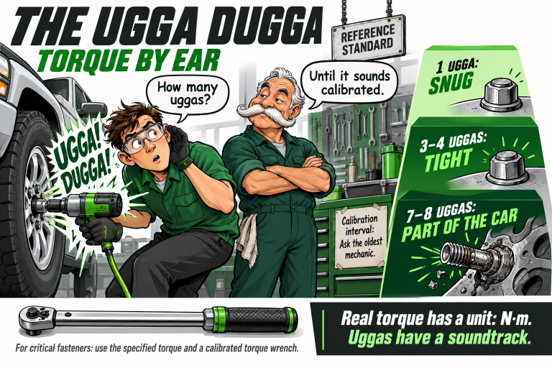
Figure 8. The ugga dugga scale, as taught on the shop floor. Real torque has a unit: N·m (n = 1 impact wrench).
One more before we close up the shop: torque deserves a turn. The ugga dugga has never been defined by the BIPM, adopted by the CGPM, or listed in NIST SP 811. It has also never been retired, because it was never hired. Yet it may be the most widely used torque unit that has never appeared on a calibration certificate.
The name comes from the sound a pneumatic or electric impact wrench makes as it drives a nut home: ugga-dugga-ugga-dugga. Instead of reading lbf·ft off a calibrated torque wrench, the mechanic counts the bursts on the trigger. Each burst is one ugga dugga.
The scale, as handed down from one mechanic to the next, goes like this. One ugga dugga is snug. Three or four is tight. Seven or eight means the bolt is stripped or welded in place, and it is now a permanent part of the car. There is no calibration interval. There is no coverage factor. The reference standard is whoever has been in the shop the longest.
The ugga dugga has a sister unit in the same informal system: the German torque spec, pronounced guten-tight. It means the fastener is tight enough by feel. The traceability chain for guten-tight ends at a forearm, which puts it in the same family as the cubit.
Now the serious part. What an impact wrench delivers depends on air pressure or battery charge, the hammer mechanism, the socket, any extensions, and the stiffness of the joint itself. The same number of uggas can put very different torque on a hard joint and on a soft one. That is why most professionals save the impact gun for general assembly and stubborn lug nuts, and torque critical components like cylinder heads and drain plugs to the manufacturer's specification with a calibrated torque wrench.
Where it sits in SI today. The SI unit of torque is the newton metre, 1 N·m = 1 kg·m²/s². The ugga dugga has no SI value because it has no definition. The best available conversion is 1 ugga dugga ≈ whatever that wrench delivered in one burst, on that joint, at that air pressure, on that day. Repeatability is poor. Reproducibility between mechanics is worse. If you ever see one on a work order, ask for the torque wrench's calibration certificate. If nobody can find it, the job was done in uggas.

Figure 9. The firkin applies for calibration. Original cartoon featuring a technician who looks suspiciously like the author if the author were a vampire; no ale was wasted (n = 1 firkin).
Note: AI helped research this article, find some of the more obscure units, create the images, and tie the concepts together. Without it, this would have been a paper on the barleycorn and the dyne. We value AI and use it as a tool.
About Morehouse
We believe in changing how people think about Force and Torque calibration in everything we do, including, "Obsolete Units of Measurement"
This includes setting expectations and challenging the "just calibrate it" mentality by educating our customers on what matters and what may cause significant errors.
We focus on reducing these errors and making our products simple and user-friendly.
This means your instruments will pass calibration more often and produce more precise measurements, giving you the confidence to focus on your business.
Companies around the globe rely on Morehouse for accuracy and speed.
Our measurement uncertainties are 10-50 times lower than the competition, providing you with more accuracy and precision in force measurement.
We turn around your equipment in 7-10 business days so you can return to work quickly and save money.
When you choose Morehouse, you're not just paying for a calibration service or a load cell.
You're investing in peace of mind, knowing your equipment is calibrated accurately and on time.
Through Great People, Great Leaders, and Great Equipment, we empower organizations to make Better Measurements that enhance quality, reduce risk, and drive innovation.
With over a century of experience, we're committed to raising industry standards, fostering collaboration, helping with understanding risk, and delivering exceptional calibration solutions that build a safer, more accurate future.
Contact Morehouse at info@mhforce.com to learn more about our calibration services and load cell products.
Email us if you ever want to chat or have questions about a blog.
We love talking about this stuff. We have many more topics other than, "Obsolete Units of Measurement"
Our YouTube channel has videos on various force and torque calibration topics here.